



How Long Does It Take to See Results with JarveePro?
This is usually the first question people ask before they start using automation:
“Okay, but how fast do I actually see results?”
The honest answer is: there is no single timeline.
Because results don’t come from the tool alone—they come from industry type, content quality, account maturity, and how aggressive your strategy is.
What does stay consistent is the pattern. Let’s break it down in a way that actually reflects real-world usage across different industries.
First: What “Results” Actually Means Changes by Industry
Before timelines, we need to clear something up:
“Results” is not the same for everyone.
- A real estate agent = leads and inquiries
- A PVC / industrial manufacturer = distributor requests or B2B inquiries
- An electronic components supplier = RFQs, website visits, trade interest
- A culture or media page = reach, shares, followers
So when someone says “I want results fast,” the first question should be:
What kind of result are you actually trying to get?
That changes everything.
Week 1–2: Setup + Signal Collection Phase
This is where most people underestimate the process.
Across all industries, the first 1–2 weeks are usually about:
- Connecting accounts and platforms
- Testing posting consistency
- Establishing baseline engagement
- Letting algorithms “read” your activity pattern
There is usually no dramatic growth yet.
But here’s what does matter:
- Real estate pages start getting stable post visibility in local feeds
- Industrial accounts begin indexing content for niche keywords
- B2B pages start appearing more consistently in search and hashtags
- Media pages start testing what type of content gets saved or shared
It’s quiet—but important.
Week 2–4: Early Performance Differences Start Showing
This is where industries start to diverge.
Real Estate
- Listings start getting more consistent impressions
- “Neighborhood content” begins outperforming generic posts
- Some posts start generating DMs or inquiries
Result is still early, but lead signals begin appearing.
PVC / Manufacturing / Industrial
- Educational posts (“how it’s used” content) start getting traction
- Distributor audiences begin engaging slowly but steadily
- Website clicks become more consistent than likes
This niche is slower, but higher value per interaction.
Electronic Components (B2B / Semiconductors)
- Technical posts start ranking in niche searches
- LinkedIn-style content often performs better than visual posts
- RFQ traffic is still low but starting to appear
This is a trust-building phase, not a viral phase.
Culture / Media Pages
- This is where speed shows up fastest
- Some posts may go semi-viral within days
- Shares and saves increase rapidly if content hits trends
But it’s volatile—growth is fast, but less predictable.
Week 4–8: Momentum Phase (Where Things Start Compounding)
This is the phase where people either say:
- “This is working”
or - “Nothing is happening” (because they expected instant scale)
Here’s what actually happens:
Real estate
- Leads become more consistent
- Retargeting audiences start forming
- Local visibility improves noticeably
Industrial / PVC / Manufacturing
- Distributor inquiries begin showing up
- Trade-related traffic becomes more stable
- Content authority starts building slowly but steadily
Electronic components
- Search visibility improves in niche keywords
- More inbound B2B messages (not many, but higher quality)
- Company credibility increases
Culture / media pages
- Follower growth accelerates
- Engagement becomes pattern-based (what worked before repeats again)
- Some posts outperform others clearly, making strategy easier
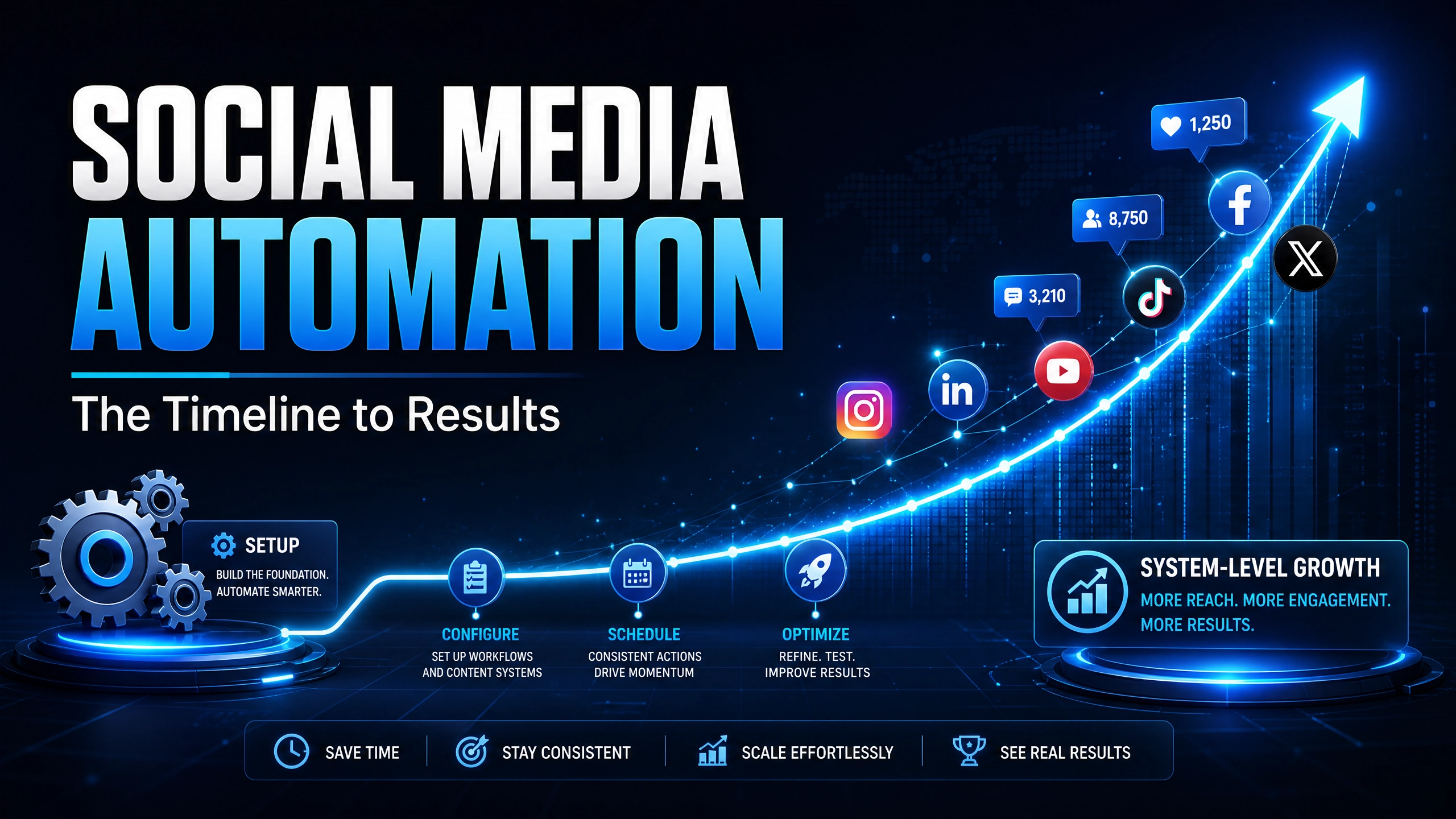
Month 2–3: System-Level Growth Phase
This is where things stop feeling like “posting” and start feeling like a system.
Across industries, you typically see:
- More predictable engagement patterns
- Better-performing content identification
- Repeatable growth loops
- Multi-account scaling (for agencies)
- More stable inbound traffic or leads
At this stage, the difference between users is no longer the tool—it’s how well they:
- understand their audience
- structure content
- and refine what works
Why Some Users See Results Faster Than Others
This is the part most people don’t want to hear, but it matters:
1. Content quality dominates everything
Automation cannot fix weak positioning.
2. Industry speed is different
- Culture/media = fast but unstable
- Real estate = moderate but lead-driven
- Industrial/B2B = slow but high value
3. Consistency beats intensity
Posting aggressively for 3 days means less than steady posting for 30.
4. Account history matters
New accounts behave differently than aged, trusted ones.
Conclusion
If you expect instant results, you’ll likely misread the system.
But if you understand how it actually works:
- Week 1–2 → setup + learning phase
- Week 3–6 → early traction + signals
- Month 2–3 → compounding growth
- 3+ months → system-level scaling
That’s when automation stops feeling like “posting tools” and starts behaving like a distribution engine across industries.
And that’s where real scale begins.