


One Person Company (OPC) in 2026: How AI & Automation Are Replacing Entire Teams
For years, building a “real business” meant one thing:
hire people, build a team, scale operations.
Solo founders were seen as limited—trapped by time, capacity, and burnout.
That assumption is quietly breaking.
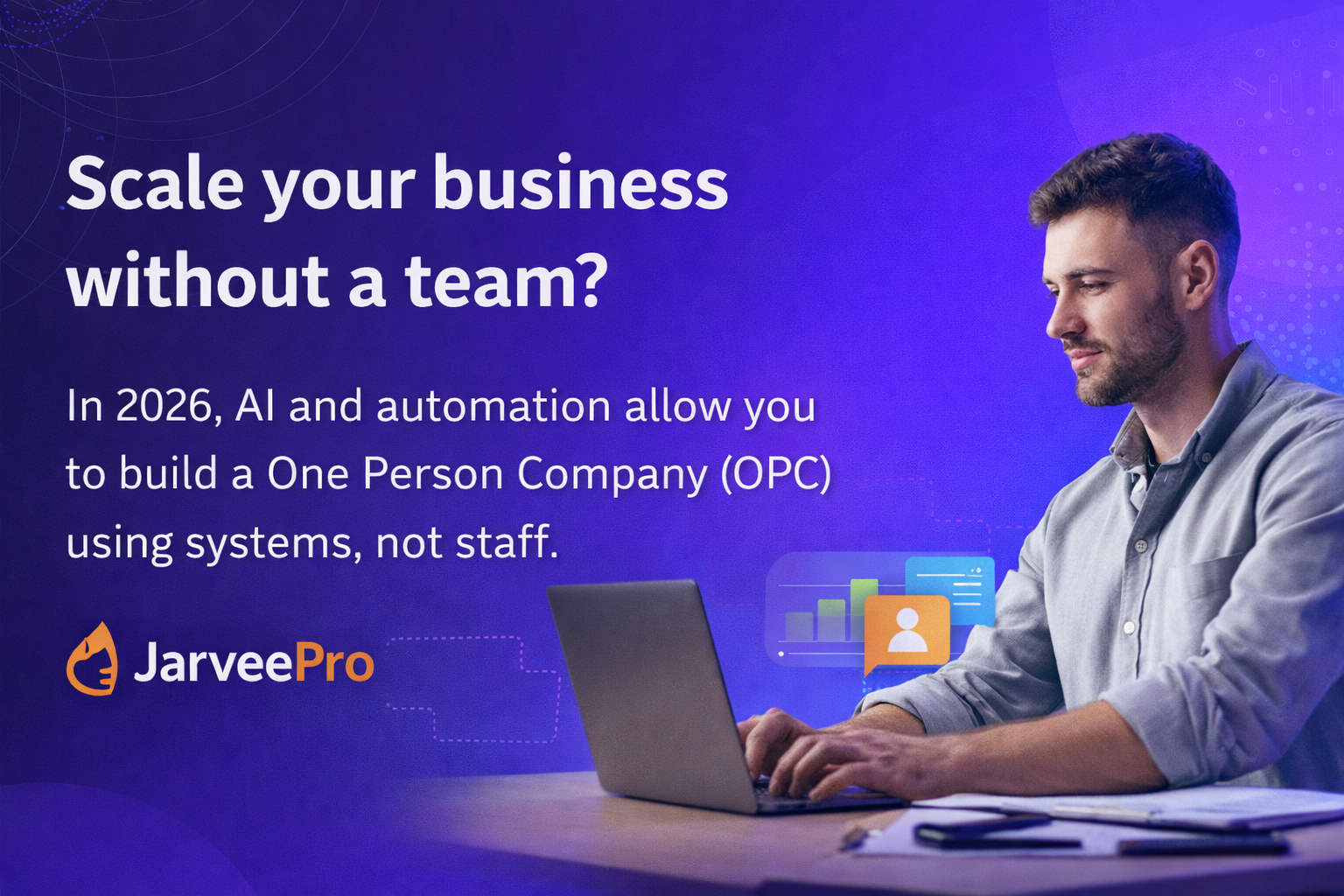
In 2026, a new model is emerging: the One Person Company (OPC)—a business where a single operator can execute at the level of an entire team. Not by working harder, but by designing smarter systems powered by AI and automation.
This isn’t about solopreneur hustle culture.
It’s about leverage.
From Effort to Leverage: The Fundamental Shift
The traditional company model is built on linear growth:
- More output → requires more people
- More people → requires more management
- More management → slows everything down
OPCs flip this model entirely.
Instead of adding headcount, they add capabilities:
- AI handles content generation and ideation
- Automation handles execution and repetition
- Systems handle consistency and scale
The result is non-linear output.
One person is no longer constrained by hours in a day—they’re constrained only by how well their systems are designed.
Why Now? The Perfect Storm in 2026
This shift didn’t happen overnight. It’s the result of three forces finally converging:
1. AI Is No Longer the Bottleneck
We’ve moved past the phase where AI produces unusable, generic output. Today, it’s good enough to:
- Generate high-quality drafts
- Repurpose content across formats
- Support strategic thinking
Not perfect—but fast, consistent, and scalable.
2. Automation Became Accessible
Execution used to be the hard part.
Now, tools like JarveePro allow solo operators to:
- Monitor conversations at scale
- Identify engaged audiences
- Trigger interaction workflows automatically
The gap between knowing what to do and actually doing it consistently has shrunk dramatically.
3. Distribution Rewards Consistency, Not Size
Social platforms don’t care how big your team is.
They reward:
- Frequency
- Relevance
- Engagement
Which means a well-structured OPC can outperform a disorganized team—simply by being more consistent.
The OPC Stack: How One Person Operates Like a Team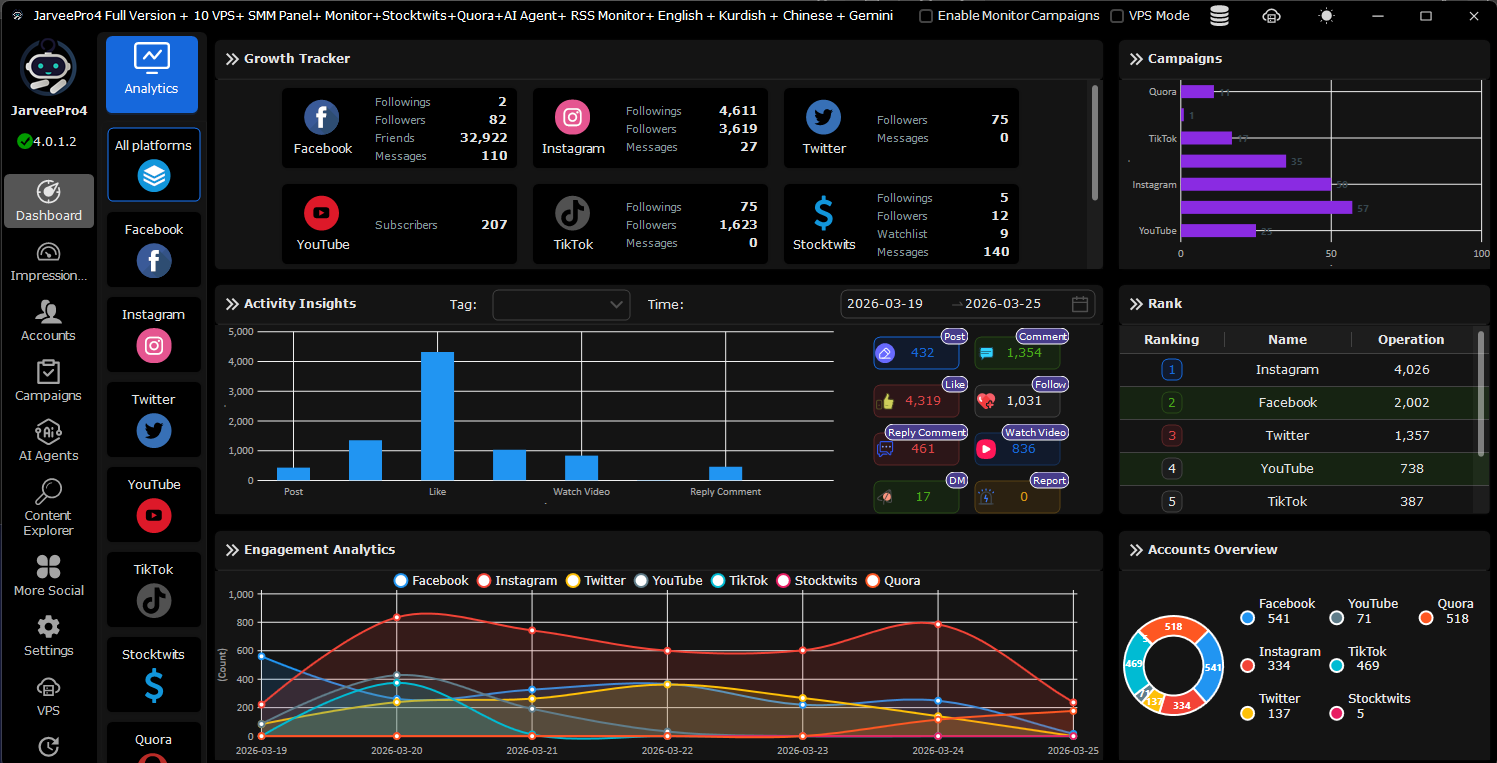
What makes an OPC powerful isn’t a single tool—it’s how everything connects.
At a high level, the system looks like this:
Creation Layer (Thinking at Scale)
AI becomes your idea partner:
- Generating content angles
- Drafting posts
- Turning one idea into multiple formats
This eliminates the “what do I post today?” problem permanently.
Execution Layer (Working Without You)
This is where most people fail—and where automation changes everything.
Instead of manually:
- Searching for content opportunities
- Engaging with users one by one
- Following up inconsistently
You build workflows that:
- Monitor keywords and trends
- Detect high-engagement posts
- Extract and engage with relevant users
This is where tools like JarveePro act as an execution engine, turning intent into consistent action.
Optimization Layer (Learning Faster Than Teams)
The real advantage of an OPC isn’t just speed—it’s feedback.
Without layers of approval or internal friction, you can:
- Test ideas quickly
- Double down on what gets replies (not just likes)
- Adapt messaging in real time
A team might take weeks to pivot.
An OPC can do it in a day.
The Hidden Advantage: Speed Over Scale
Here’s the part most people underestimate:
Large teams don’t just add capacity—they add friction.
Meetings, approvals, coordination… all of it slows execution.
OPCs operate differently:
- Decisions are instant
- Execution is immediate
- Iteration is constant
This creates a compounding advantage.
Speed becomes the new scale.
Where Most People Get It Wrong
The idea of an OPC is powerful—but easy to misuse.
Two common traps show up quickly:
1. Over-Automation
Trying to scale too fast with:
- Generic messages
- Repetitive actions
- Zero personalization
This doesn’t just fail—it gets accounts flagged.
2. Over-Reliance on AI
Publishing content that:
- Sounds polished but empty
- Lacks real perspective
- Feels indistinguishable from everyone else
AI can generate content.
It cannot replace taste, judgment, or voice.
The Real Skill: System Thinking
The future doesn’t belong to people who know the most tools.
It belongs to people who can design systems.
That means:
- Knowing what to automate—and what not to
- Connecting tools into workflows
- Building feedback loops that improve over time
In an OPC, your job shifts from doing the work to:
Designing how the work gets done.
Conclusion
The One Person Company isn’t just a new way to work—it’s a new way to think about business entirely.
In 2026, the question is no longer:
“How do I build a team to grow?”
It’s:
“How do I build a system that scales without one?”
AI handles thinking support.
Automation handles execution.
You focus on direction, strategy, and leverage.
And for the first time, that’s not just possible—it’s practical.