


SEO in 2026: White-Hat Growth, Smart Backlinks, and Why the Old Tricks Are Dying
Search engine optimization in 2026 looks very different from the SEO most marketers learned five years ago.
The era of:
- mass spam backlinks
- keyword stuffing
- AI-generated garbage pages
- fake authority sites
- “10,000 backlinks for $5” Fiverr miracles
is collapsing fast.
Search engines got smarter.
AI search changed discovery.
Users became less patient.
And trust became the new ranking signal.
Today, the websites winning organic traffic are not necessarily the biggest brands.
They are the brands that:
- publish consistently
- build real topical authority
- earn trust signals
- create discoverable content
- distribute intelligently
- understand audience intent better than competitors
White-hat SEO is no longer the “slow boring method.”
In 2026, it is actually the most scalable strategy.
What White-Hat SEO Really Means in 2026
White-hat SEO simply means:
optimizing for humans first while staying aligned with search engine guidelines.
That sounds obvious.
But many marketers still optimize for algorithms instead of audiences.
Modern SEO is now deeply connected to:
- user behavior
- engagement quality
- branded searches
- content satisfaction
- creator authority
- entity recognition
- cross-platform visibility
Google, AI search engines, YouTube, Reddit, TikTok, and even social algorithms now reinforce each other.
SEO is no longer isolated.
It became part of a larger “attention ecosystem.”
The Biggest SEO Shift Happening Right Now
In the past:
- backlinks alone could rank weak content
Now:
- weak content with strong backlinks often collapses over time
Search engines increasingly measure:
- content usefulness
- originality
- user retention
- engagement patterns
- brand mentions
- expertise consistency
This is why many “SEO-only websites” disappeared after recent updates.
Meanwhile:
- niche creators
- personal brands
- genuine businesses
- communities
- expert-driven blogs
are gaining visibility.
Authenticity became algorithmically valuable.
Which is honestly hilarious considering the internet spent 15 years rewarding the exact opposite.
Backlinks Still Matter — But Differently
Backlinks are still important in 2026.
Very important.
But the definition of a “good backlink” changed dramatically.
A strong backlink today is:
- contextually relevant
- placed naturally
- surrounded by meaningful content
- coming from a trusted source
- capable of generating actual clicks
Google increasingly values:
- relevance over volume
- trust over manipulation
- engagement over raw link count
One relevant mention from a respected niche site can outperform hundreds of low-quality backlinks.
That is a massive shift.
The White-Hat Backlink Strategy That Actually Works
Here is what smart marketers are doing in 2026.
1. Build Linkable Assets
People link to:
- original research
- statistics
- case studies
- tools
- calculators
- templates
- controversial opinions
- useful guides
Nobody wants to link to:
“Top 7 Social Media Tips You Need Today!!!”
The internet already has 900 million of those.
Create something worth referencing.
Examples:
- industry benchmarks
- AI workflow tutorials
- automation experiments
- ranking studies
- platform growth reports
- marketing frameworks
2. Use Content Distribution Aggressively
Publishing alone is dead.
Distribution is now half the SEO game.
Good SEO marketers distribute content through:
- X/Twitter
- Facebook groups
- niche communities
- YouTube Shorts
- newsletters
- Discord servers
The goal is not just traffic.
The goal is:
- visibility
- mentions
- citations
- natural backlinks
- branded searches
Search engines increasingly notice when people actively discuss your brand online.
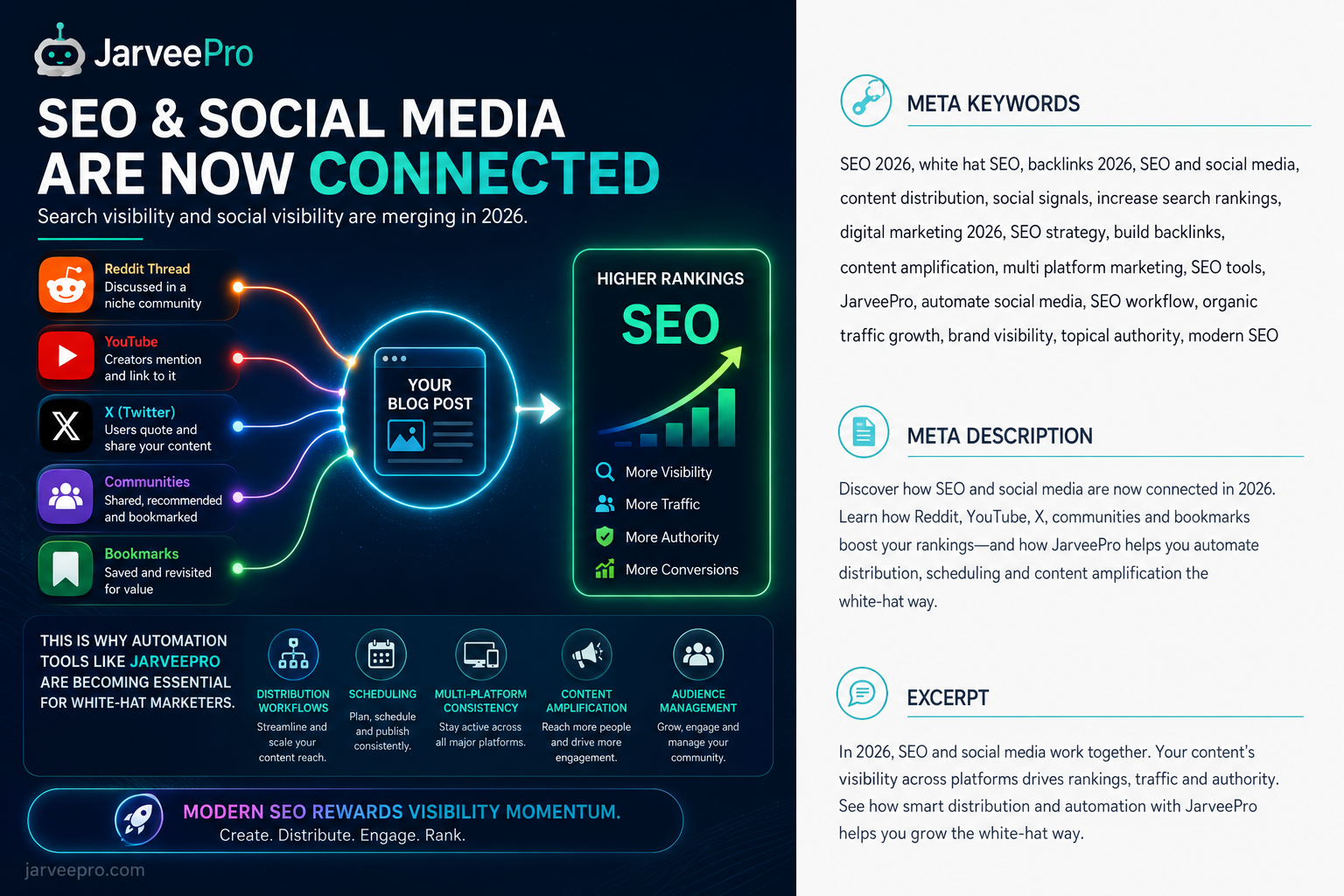
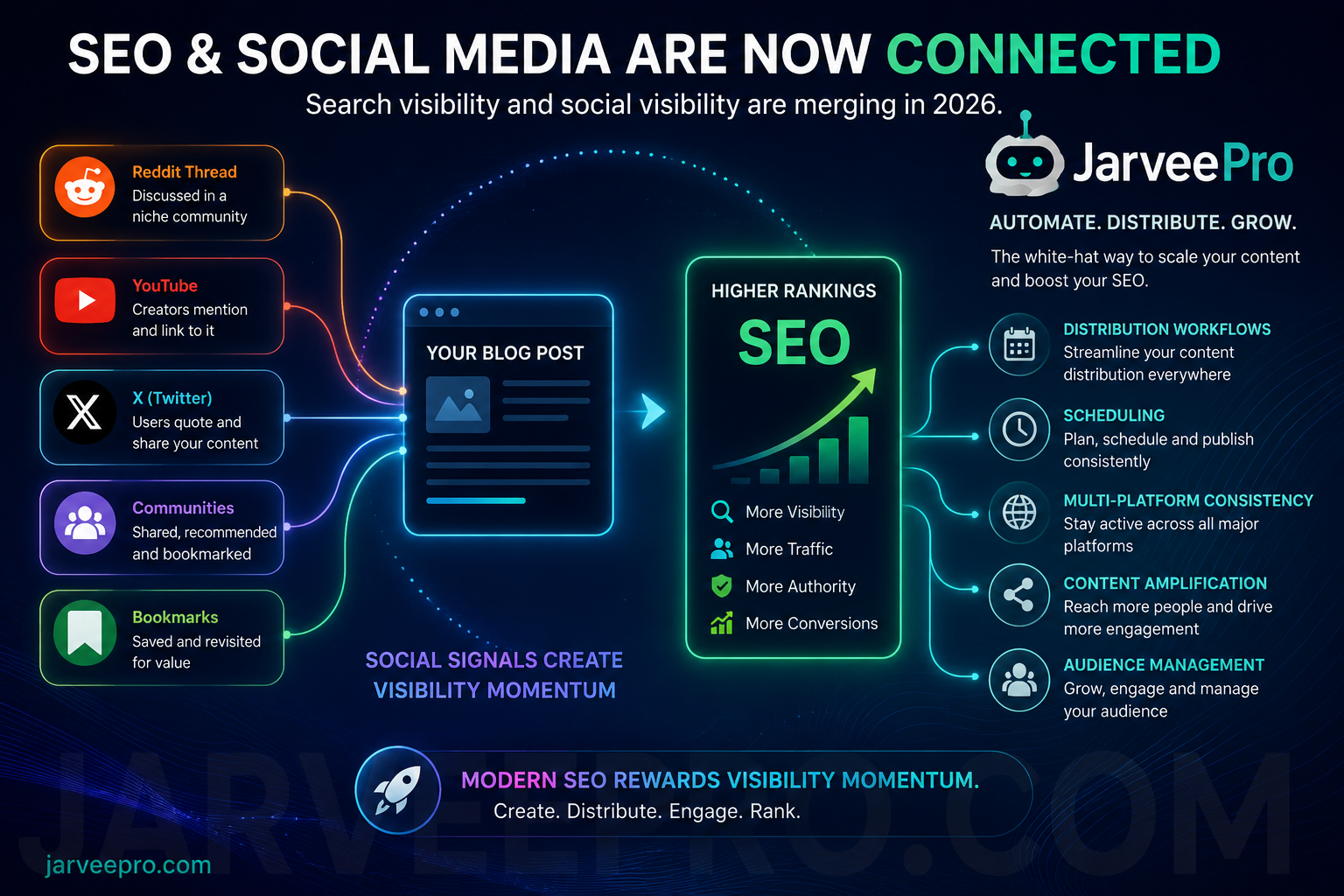
SEO and Social Media Are Now Connected
This is one of the most important realities of 2026.
A blog post can gain rankings because:
- a Reddit thread discussed it
- creators shared it
- YouTube mentioned it
- X users quoted it
- communities bookmarked it
Search visibility and social visibility are merging.
This is why automation tools like JarveePro are becoming useful for white-hat marketers.
Not for spam.
But for:
- distribution workflows
- scheduling
- multi-platform consistency
- content amplification
- audience management
Modern SEO rewards visibility momentum.
How to Build Backlinks Without Looking Like a Spammer
Here is the realistic approach.
Focus on:
- relationships
- relevance
- expertise
- consistency
Good methods:
- guest posting on real sites
- collaborating with creators
- publishing unique data
- becoming quotable
- joining niche communities
- answering questions publicly
- building free tools/resources
- digital PR campaigns
Bad methods:
- mass blog comments
- PBN farms
- AI spam sites
- irrelevant directory blasts
- automated forum spam
- fake outreach emails
If your backlink strategy feels like a scam operation from a movie involving burner phones and energy drinks, it is probably not white-hat.
AI Content Is Not the Enemy
Low-quality content is.
AI-assisted writing is now normal.
Almost every major marketing team uses AI in some form.
The problem is when marketers:
- publish unedited AI spam
- produce generic content
- chase volume over value
- create pages nobody actually wants
The winning formula is:
AI-assisted creation + human insight + original experience
That combination scales extremely well.
The Smart SEO Formula for 2026
Here is the practical framework:
Step 1 — Pick a Real Niche
Avoid broad generic topics.
Become known for something specific.
Step 2 — Build Topic Clusters
Create interconnected content around one expertise area.
Search engines reward topical depth.
Step 3 — Publish Consistently
Momentum matters more than perfection.
Step 4 — Distribute Everywhere
Content should travel.
Step 5 — Earn Mentions Naturally
Be useful enough to reference.
Step 6 — Build Brand Searches
People searching your name directly is now a major trust signal.
Step 7 — Optimize User Experience
Fast site.
Readable content.
Clear structure.
No ad apocalypse destroying usability.
SEO in 2026 Is More Human Than Ever
Ironically, after years of manipulation, search engines are now moving back toward rewarding genuinely useful content.
The marketers winning today are not necessarily gaming the algorithm.
They are:
- understanding attention
- publishing strategically
- building trust
- creating memorable content
- becoming recognizable entities online
White-hat SEO is no longer “safe but slow.”
Done correctly, it is one of the strongest long-term growth assets a business can build.
And unlike spam tactics:
it compounds.
That is the real difference.
Black-hat SEO chases shortcuts.
White-hat SEO builds momentum that survives updates, platform shifts, and AI-driven search changes.
In 2026, that durability matters more than ever.