



What Happens When Your SMM Panel Goes Down? The Hidden Cost of Unreliable Infrastructure
It's Monday morning. Your SMM panel is receiving orders, your customers are making payments, and your resellers are bringing in new business.
Then something stops working.
Orders remain pending. Your suppliers aren't responding. Your customers start asking for updates, and your support team spends the entire morning answering questions instead of helping generate new business.
Suddenly, your biggest concern isn't finding more customers.
It's keeping the ones you already have.
This is one of the least discussed challenges of running a social media marketing business: the infrastructure behind the storefront.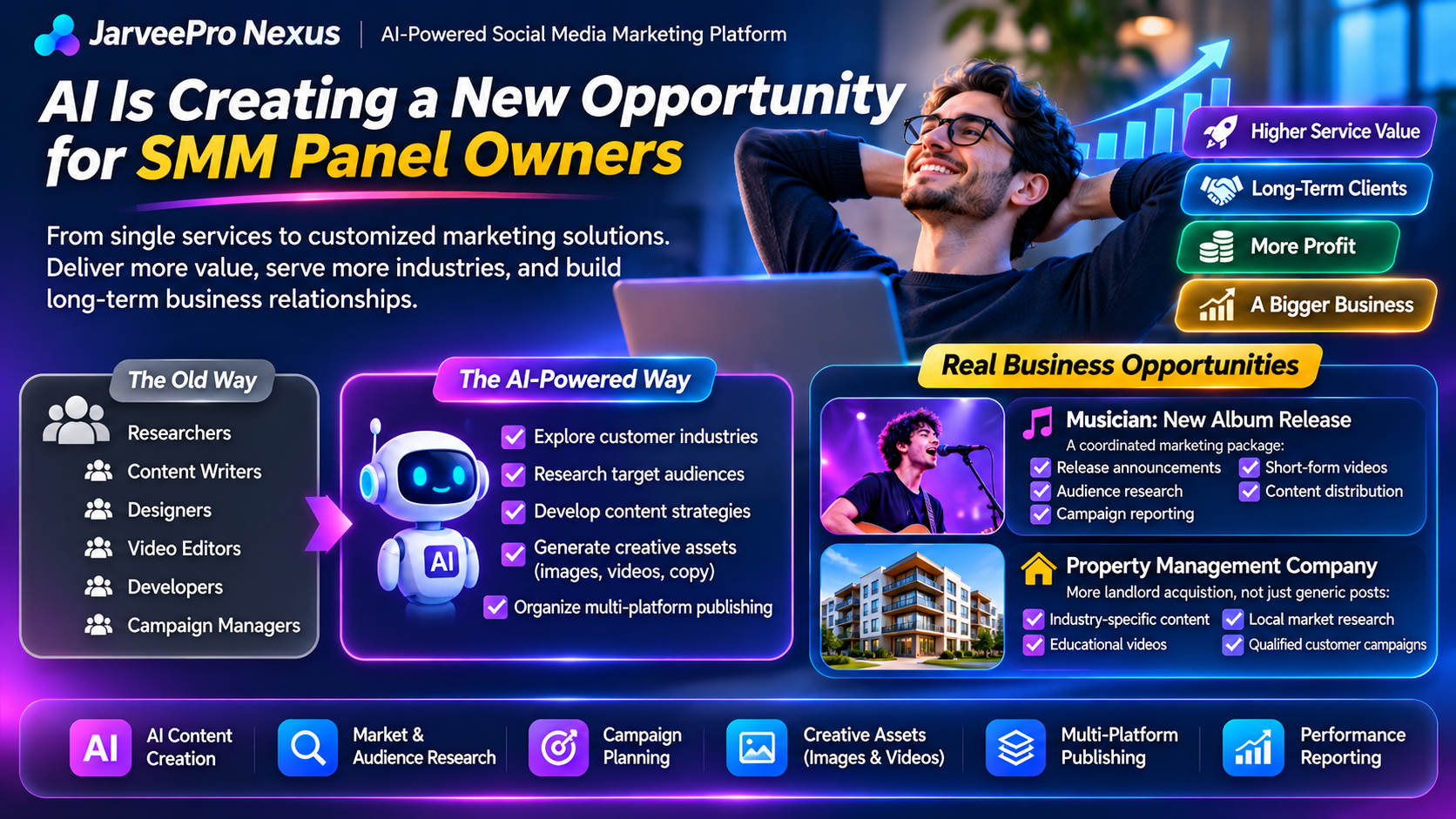
Your Customers See a Website. You Run an Entire Operation.
From a customer's perspective, an SMM panel is relatively simple.
Choose a service, place an order, make a payment, and wait for delivery.
From the business owner's perspective, however, every order involves a series of operational decisions, external dependencies, technical processes, and financial responsibilities.
Your customers don't care which software you use, how your API works, or where your servers are located.
They care about whether you deliver what you promised.
And if your customers are resellers, the responsibility becomes even greater. They have their own customers waiting for results.
When your business experiences downtime, the consequences can travel through an entire commercial network.
This is why infrastructure becomes increasingly important as a marketing service business grows.
Getting Your First 100 Customers Is Different From Serving Your Next 10,000
When you first enter the SMM industry, customer acquisition is usually your biggest challenge.
You spend time comparing competitors, improving your website, adjusting prices, joining marketing communities, and looking for resellers.
Your attention is focused on generating orders.
But once those orders start arriving consistently, the nature of your business changes.
You begin spending more time managing suppliers, monitoring delivery, coordinating technical resources, handling customer requests, and resolving operational problems.
The skills that helped you acquire your first customers are not necessarily the skills that will help you serve thousands of them.
At a certain point, growth stops being purely a marketing challenge.
It becomes an operational challenge.
Many entrepreneurs underestimate this transition because revenue growth creates the impression that everything is going well.
But a growing business and a scalable business are not necessarily the same thing.
The Real Cost of Downtime Is Not What You Think
Imagine your business processes 1,000 orders per day, with an average order value of $5.
That's $5,000 in daily order value.
If your operations are interrupted for 24 hours, some of those orders may eventually be completed. Others may be canceled or refunded.
But the financial impact doesn't end there.
Your employees spend more time handling complaints. Your resellers begin looking for alternative providers. Potential customers who visit your website may decide not to place an order.
Perhaps most importantly, you lose time that could have been spent developing new services or expanding into new markets.
The business owner becomes a full-time problem solver instead of a business developer.
And while you are busy resolving today's operational problems, your competitors are working on tomorrow's opportunities.
Downtime doesn't just interrupt revenue. It interrupts momentum.
Are You a Service Provider or Simply a Reseller?
Many entrepreneurs enter the SMM industry through a familiar business model.
They build a website, connect third-party providers, add a profit margin, and focus on attracting customers.
There is nothing inherently wrong with this approach. It allows entrepreneurs to enter the market without developing an entire technology platform themselves.
But as the business grows, an important question emerges:
How much of your business do you actually control?
If your supplier increases prices, can you maintain your profit margin?
If an external API becomes unavailable, can you continue delivering your services?
If your competitors use the same suppliers, what makes your business different?
If your supplier launches its own retail platform, what prevents it from competing directly with you?
You may own your website, your brand, and your customer relationships. But if every part of service delivery depends on another company, your independence may be more limited than you realize.
This is not an argument against outsourcing.
It is an argument for understanding which parts of your business create value and which parts create dependency.
Successful businesses rarely own everything. But they understand what they cannot afford to lose control of.
What Your Customers Don't Tell You
A reseller might place a small order with your business today.
You see a $10 transaction.
What you don't see is that the reseller may be testing five different providers before deciding where to place thousands of dollars in future orders.
They are evaluating more than price.
They want to know whether your service is consistent, whether your support team responds, whether your platform is easy to use, and whether they can build their own business around yours.
A single customer may represent much more commercial potential than their first transaction suggests.
This is particularly important in B2B marketing services.
When a business chooses a supplier, it is often making a decision about its own reputation.
A reliable supplier allows that business to make promises confidently. An unpredictable supplier forces it to constantly manage uncertainty.
The cheapest provider may win the first order.
The dependable provider has a better chance of winning the relationship.
Why Competing on Price Becomes Increasingly Difficult
If you have been in the SMM industry for several years, you have probably noticed how quickly competitors ca
n replicate services.
Someone launches a new panel. Someone offers a lower price. Someone introduces a larger service catalog.
Customers compare providers, and profit margins become increasingly competitive.
When businesses sell nearly identical services through nearly identical infrastructure, price becomes one of the few visible differences.
But what if you could offer something your competitors couldn't easily replicate?
Instead of simply reselling standardized services, you could develop marketing packages around specific industries.
A restaurant doesn't necessarily need the same marketing service as a musician.
A real estate agency has different customer acquisition challenges from an e-commerce business.
A manufacturing company may care more about reaching distributors than generating general social media attention.
Understanding these differences creates opportunities to sell expertise, not just individual transactions.
And expertise is much harder to compare on a price list.
AI Is Creating a New Opportunity for SMM Panel Owners
Until recently, developing customized marketing services required considerable human resources.
You needed researchers, content writers, designers, video editors, developers, and campaign managers.
For smaller service providers, offering customized solutions to every customer was difficult to justify financially.
AI is changing that calculation.
A marketing service provider can now explore customer industries, research relevant audiences, develop content strategies, generate creative assets, and organize multi-platform publishing with significantly less manual production work.
Consider a musician preparing to release a new album.
Instead of purchasing an isolated promotional service, the musician could purchase a coordinated marketing package covering release announcements, short-form videos, audience research, content distribution, and campaign reporting.
Or consider a property management company looking to acquire more landlords.
Rather than purchasing generic social media activity, it could invest in industry-specific content, local market research, educational videos, and qualified customer acquisition campaigns.
These are opportunities to transform one-time transactions into ongoing business relationships.
For SMM panel owners, AI is not simply another service to add to the catalog.
It is an opportunity to reconsider what the entire business could become.
From Selling Marketing Services to Owning Marketing Infrastructure
As your business develops, you may reach a point where connecting another external supplier is no longer enough.
You want greater control over content production, account management, campaign execution, reporting, and integration with your existing business systems.
However, developing everything from scratch requires time, engineering expertise, and substantial investment.
This is where platforms such as JarveePro Nexus become relevant.
JarveePro Nexus is an AI-powered social media marketing platform designed to bring multiple marketing operations into a unified environment.
For established marketing service providers, its value extends beyond ordinary social media scheduling.
With support for 19 platforms, AI-powered content creation, unlimited account management in the Pro edition, campaign management, Integration API, and distributed execution, Nexus offers capabilities that businesses can evaluate as part of their existing operational infrastructure.
You don't necessarily need to replace your current website, customer dashboard, or business management system.
Instead, you can explore how supported marketing workflows could be integrated into the systems you already operate.
The objective is to give your business greater control over the legitimate marketing services it delivers.
You Don't Need Another Software Subscription. You Need a Business That Works.
One of the biggest mistakes technology companies make is assuming that every customer has a technology problem.
Most business owners have business problems.
They want better margins, more customers, fewer complaints, stronger relationships, and greater control over their operations.
Software is valuable only when it helps achieve those objectives.
This is why two SMM panel owners may need completely different solutions, even if their websites look almost identical.
One may need to improve content production.
Another may need to connect its existing platform with supported marketing workflows.
A third may want to introduce customized industry-specific marketing services.
Before investing in technology, it is worth understanding what is preventing your business from reaching its next stage.
The right infrastructure should support your business model, rather than forcing your business model to adapt to the software.
What Will Your SMM Business Look Like in Three Years?
Will you still be competing primarily on price?
Will you still depend on the same external suppliers as hundreds of other panels?
Will your revenue continue to come mainly from individual transactions?
Or will you have developed your own marketing capabilities, specialized services, customer relationships, and operational systems?
The emergence of AI gives today's SMM entrepreneurs an opportunity to move beyond the traditional reseller model.
But technology alone won't create that transformation.
It requires understanding your customers, recognizing where your business creates value, and developing the infrastructure to deliver that value consistently.
At JarveePro, we welcome conversations with SMM panel owners, marketing agencies, digital service providers, and marketing SaaS developers who are exploring their next stage of growth.
Whether you already operate an established business or are planning to develop your own marketing platform, tell us how your business works.
We can explore your software requirements, supported API integrations, customization opportunities, and potential implementation approaches.
Explore JarveePro Nexus: https://jarveepro.com/
Your website is where customers discover your business.
Your infrastructure is what allows you to keep your promises.
And your ability to keep those promises is what turns a transaction into a business relationship.